The Structural Shift in Late-Season La Liga
Matches played in late March, April, and May exhibit distinct tactical patterns compared to autumn fixtures. Rising ambient temperatures across southern and central Spain, combined with accumulated player load, naturally lower the average pressing intensity across both halves.
Rather than pressing aggressively for 90 minutes, managers across the league are gravitating toward compact 4-4-2 or 5-3-2 mid-blocks that limit space between lines while preserving stamina for decisive bursts.
The 3-2 Rest Defense Architecture
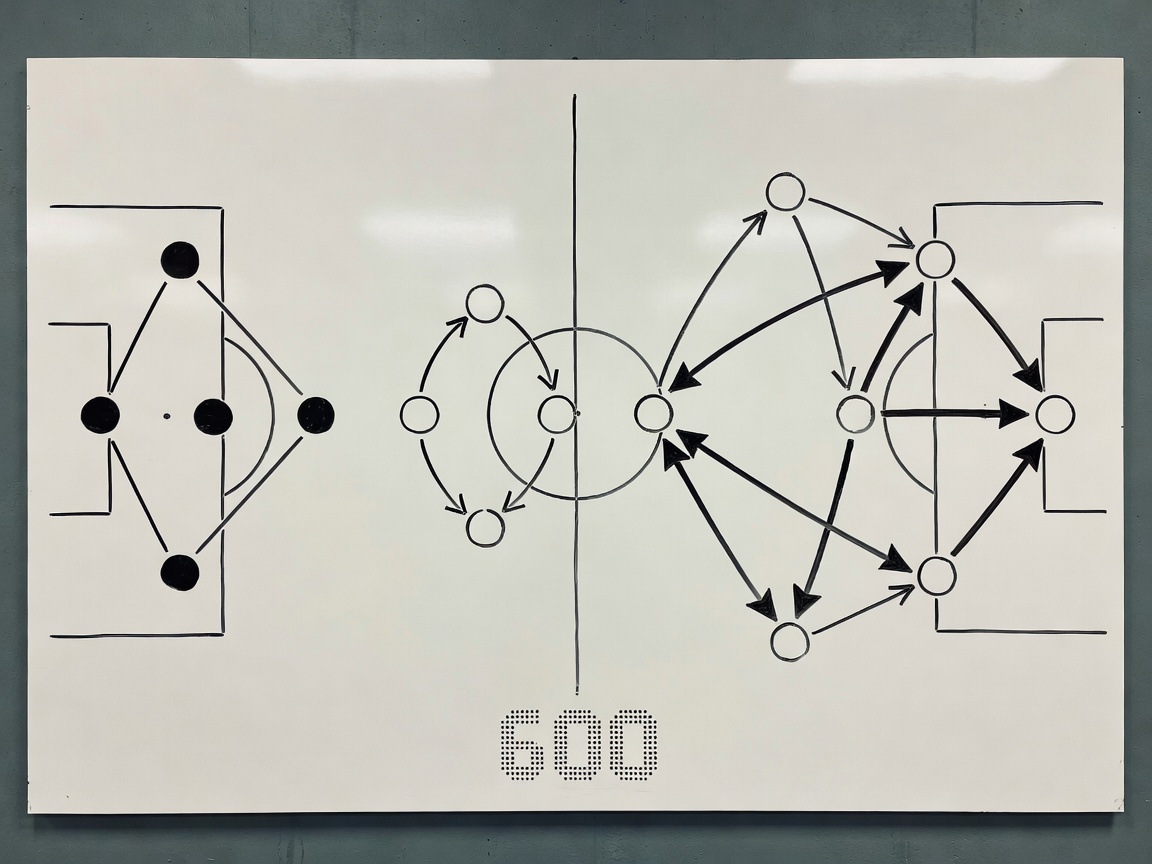
In modern Iberian football, retaining balance during attacking transitions has become paramount. Fourteen of the twenty Primera División managers have implemented structured 3-2 rest defenses. When attacking inside the opponent's final third, three defenders remain behind the ball flanked by two holding pivots:
- Counter-Press Chokehold: The double-pivot occupies the central corridor, stopping ground passes to opposing counter-attacking outlets.
- Wide Fullback Isolation: The attacking fullbacks push directly to the touchline, creating width while freeing internal creative midfielders to flood half-spaces.
- Foul Frequency Optimization: Strategic low-consequence fouls in the middle third allow defensive blocks to quickly reset without conceding dangerous set pieces.
| Tactical Dimension | Autumn Baseline (MD 1-13) | Spring Projected (MD 27-38) | Shift Analysis |
|---|---|---|---|
| PPDA (League Average) | 10.4 | 12.8 | +23.1% Less Intensive Pressing |
| Goals Scored After 75th Minute | 22.4% | 29.8% | +7.4% Concentration of Late Deciders |
| Five-Sub Allocation Rate | 4.1 per match | 4.9 per match | Maximizing Fresh Sprint Profiles |
| Yellow Cards per Match | 4.2 | 5.1 | Tactical Disruption Rises |
| Average Ball-in-Play Time | 54 min 12 sec | 51 min 45 sec | Game Pace Deliberately Dampened |
The Five-Substitution Dynamic
The institutionalization of five substitutions has radically transformed late-game dynamics. Rather than simply replacing injured or exhausted players, elite managers now routinely swap out their entire wing pairing and attacking midfield between minutes 60 and 70.
This deliberate influx of fresh legs against tired fullbacks explains why over 29% of all goals in the final third of the season are expected to occur after the 75th minute. Teams equipped with dynamic bench depth—such as Real Madrid, Atlético, and Girona—possess an immense structural advantage over clubs relying strictly on their starting eleven.
Set Pieces as the Great Leveler
As defensive open-play structures grow more rigid under late-season pressure, set-piece routines emerge as decisive tiebreakers. Clubs like Mallorca, Athletic Club, and Getafe dedicate significant training hours to choreographing screen movements and near-post flick-ons. In games decided by narrow margins, one well-designed corner routine can often secure three massive league points.